
AI automation skills are showing up on every “make money online” list lately, and most of those lists skip the hard parts. So let’s slow down and look at what’s real.
This guide covers what AI automation skills actually are, which ones to learn first, a 90-day learning plan, five ways people turn them into income, and the mistakes that trip up beginners.
One thing up front: we’re not going to promise you a dollar figure. Nobody can do that honestly. What the data does show is that employers are paying more for AI automation skills. What real learners report is that the tech is the easier half. Finding paying clients is the hard half.
What AI Automation Skills Actually Mean
Put simply, AI automation skills are the ability to hand a boring, repeated task to software, with an AI model handling the parts that need a little judgment.
Think sorting incoming emails, summarizing sales calls, or drafting first replies. Then the results land in the tools a team already uses.
You’re not building AI models from scratch. Most AI automation skills are about connecting existing pieces: a workflow tool like Zapier, Make or n8n, an AI model, and the apps your client already has.
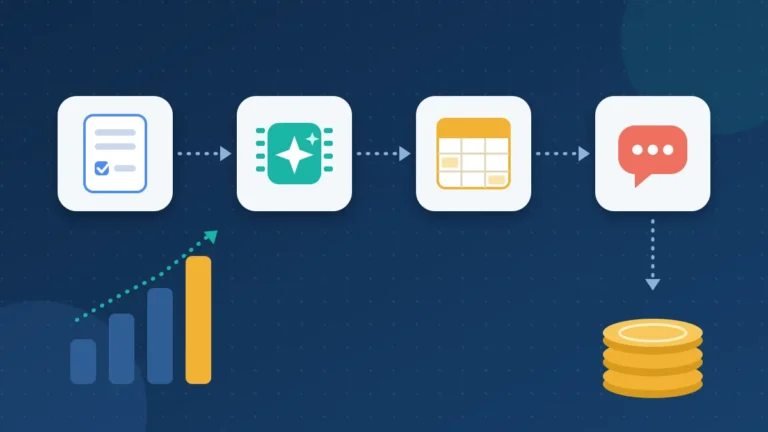
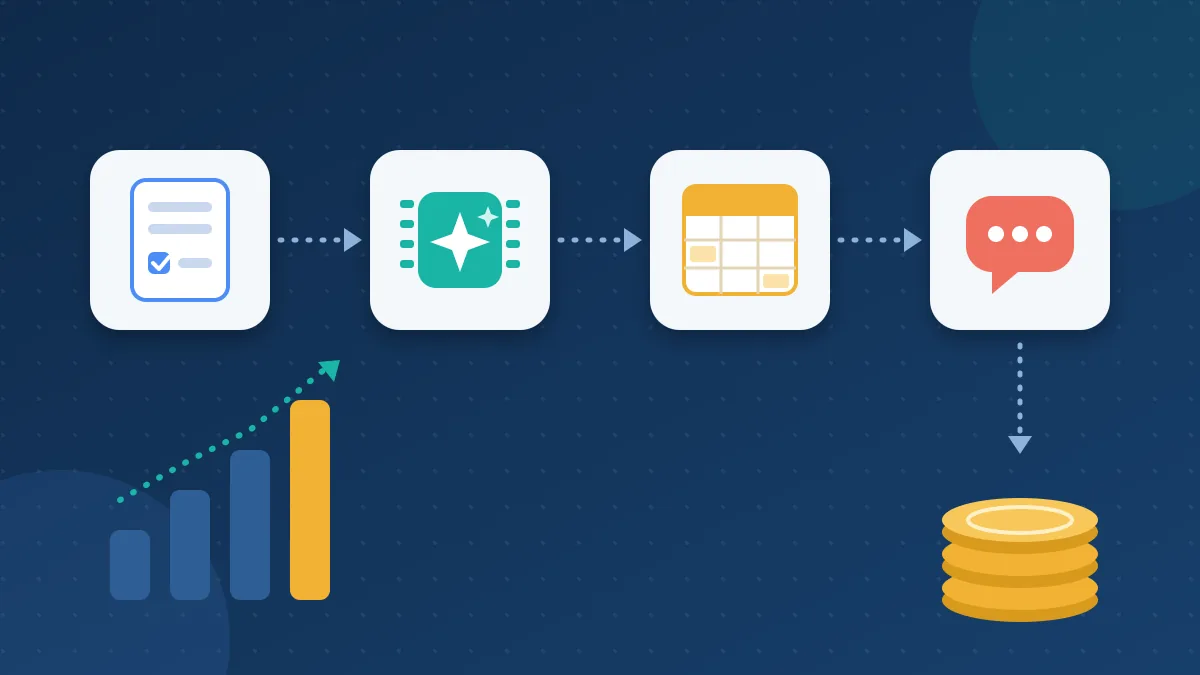
Here’s a simple example. A small plumbing company gets leads through a web form. An automation logs each lead in a spreadsheet, has an AI model draft a friendly reply, and pings the owner on Slack. Nothing fancy, and that’s the point. The value is saved time, not impressive technology.
Why Demand for AI Automation Skills Keeps Growing
The best recent numbers come from PwC. Its 2026 Global AI Jobs Barometer found the average wage premium for workers with AI skills hit 62%, up from 57% the year before. The premium swings a lot by industry, from around 16% in government work to as high as 118% in consumer markets. PwC based this on more than a billion job ads across 27 countries and territories. You can read the full press release. AI reshapes global labour market into two distinct paths, rewarding human skills: PwC 2026 Global AI Jobs Barometer +2
PwC also reports that jobs requiring specific AI skills are growing far faster (69%) than the overall job market (9%). The details are in PwC’s regional release. pwc
The World Economic Forum points the same way. Its Future of Jobs Report 2025 ranks AI and big data at the top of the fastest-growing skills. 86% of surveyed employers expect AI and information processing technologies to transform their business by 2030. Just under 40% of workers’ core skills are expected to change by 2030. jp.weforum.org +2
Read those numbers carefully. They come from job ads and employer surveys, not from your future paycheck. PwC’s premium compares ads that ask for AI skills with similar ads that don’t, within the same sector. It’s a global average, not a U.S. figure. It also covers many jobs that have nothing to do with building automations. pwc
Editorial perspective: The 62% isn’t the most useful takeaway. The better signal is that employers are adding AI to ordinary jobs like sales, operations, and finance. Someone who knows a field and has AI automation skills probably has a bigger edge than a generic “AI person.” That’s our read of the data, not a proven fact.
The AI Automation Skills Worth Learning First
You don’t need a computer science degree. You do need a handful of practical AI automation skills, and the order matters.
| Skill | What it means | A simple way to practice |
|---|---|---|
| Process mapping | Writing down every step of a task before you automate it | Map one weekly chore of your own |
| No-code workflow tools | Building flows in Zapier, Make, or n8n | Build one workflow on a free or trial plan |
| APIs and webhooks (basics) | How apps send data to each other | Connect two apps that don’t link natively |
| Working with AI models | Writing clear instructions and checking the output | Build an email summarizer and test it on 20 messy examples |
| Testing and error handling | Deciding what happens when something breaks | Add an alert for when a step fails |
| Plain-English communication | Explaining results in hours saved, not buzzwords | Write a one-page summary of what you built |
Start with process mapping before you touch any tool. A messy process automated is just a faster mess.
The two AI automation skills beginners skip most are testing and communication. They’re also the two that make clients trust you. Anyone can build a flow that works once. Clients pay for flows that keep working and for someone who can explain them.
A 90-Day Plan to Build AI Automation Skills
Here’s a realistic path to learn AI automation skills if you’re starting from zero and have a few hours a week.
Days 1–30: Automate your own life.
- Pick one tool and stay with it. Switching around is the classic beginner time-waster.
- n8n is one low-cost option. Its self-hosted Community Edition is free with unlimited executions, so you only pay for a server. The paid cloud entry plan, Starter, is listed at €20 a month billed annually. Server costs for self-hosting typically run $5 to $20 a month. Prices change, so check n8n’s pricing page before you sign up. n8n pricing +2
- Automate three personal tasks, such as bill reminders, a weekly news digest, or sorting receipts.
Days 31–60: Build three small projects for real people.
- Offer to help a family business or a friend’s shop, even for free or a small fee.
- Write down the before and after: how long the task took, and how long it takes now.
Days 61–90: Turn the projects into proof of your AI automation skills.
- Write a short case study for each: the problem, what you built, and the time saved.
- Show these to five people who run small businesses and ask what’s eating their week.
Tip: Keep one number for every project, such as hours saved per week. A client can picture that number, and it’s your best sales tool.
5 Ways to Make Money With AI Automation Skills
1. Get Paid More in the Job You Already Have
This is the least glamorous path and often the safest. Automate part of your own workflow, prove it saves time, and use that for a raise, a promotion, or a better role. You skip the hunt for clients entirely.
2. Take On Freelance Projects
Small businesses often have a task they hate doing by hand. One-off projects like lead follow-up, invoice processing, or report generation are a common starting point. If you want more ideas, see our list of 15 AI side hustles for 2027. Expect to compete on trust and proof, not just on AI automation skills.
3. Offer Monthly Maintenance
Automations break when an app changes or a connection expires. That’s a real problem for business owners. A small monthly fee to monitor and fix things can turn a one-time job into steadier income.
4. Specialize in One Industry
“AI automation for everyone” is a tough pitch. “Automation for dental offices” or “for real estate teams” is easier to explain and easier to trust. If you already know an industry from past work, that’s a head start.
5. Teach What You’ve Learned
If you can explain a workflow clearly, you can write about it, record tutorials, or coach beginners. This one is slow, and it only works if you have real projects to show first. If you go this route, our guide to planning a month of content from customer questions shows one way to find topics.
What Real Users Say About Landing the First Client
These are self-reported experiences, not verified facts. Most come from Skool communities, which are often run by people who also sell AI automation training. Keep that in mind when you read them.
- One member of an AI automation community described building a full n8n system and feeling ready to earn. Then reality hit: nobody shows up just because you built something. They had to learn to sell.
- Another poster shipped a working n8n pipeline, contacted five businesses on Instagram, and got no replies yet. They asked the community what actually worked.
- A frequent contributor to the AI Automation Society wrote that he sees the same pattern over and over: people learn n8n but can’t land a client. His view is that selling takes business context, process knowledge, and market sense, not just tool skills.
- One developer’s blog post estimates about 4–8 weeks to a first client through cold outreach, and 6–12 months for content marketing to pay off. That’s one person’s estimate, not a benchmark.
Editorial assessment: The stories line up. Learning AI automation skills is the easier half, and the first client is the real hurdle. We’d also treat any “I made $X in six months” claim with caution unless the person shows how they got clients.
A Quick Math Example (Hypothetical)
These numbers are made up to show how the arithmetic works. They are not a forecast and not typical results.
Say you charge $750 to set up a lead follow-up automation and $100 a month to maintain it. You land four clients in your first six months.
- Setup income: 4 × $750 = $3,000
- Monthly maintenance: 4 × $100 = $400
- Tool and server costs: roughly $5–$20 a month if you self-host, plus AI usage fees that vary
- Net monthly maintenance after small costs: about $380–$395
Now check your time. If each setup takes 15 hours, $750 works out to $50 an hour, before taxes. Plan on spending extra hours finding those clients, because that time isn’t paid.
Mistakes and Risks to Avoid
Watch out for these common traps:
- Overpromising results. Don’t guarantee a specific amount of time or money saved until you’ve measured it in that business.
- Mishandling client data. Don’t put a client’s customer information into an AI tool without permission, and read the tool’s data and privacy terms first.
- Skipping the maintenance plan. An automation with no owner will eventually break.
- Paying for expensive courses before building anything. Build one real project first. You’ll learn what you actually need. For other low-cost ways to start, see our online business ideas you can start with little money.
- Using a vague “AI agency” pitch. A specific problem for a specific type of business is easier to sell.
Where We’d Start
Editorial perspective: If we were starting today with AI automation skills, we’d skip the “agency” dream for now. We’d pick one repetitive task in a field we already know, automate it, record the hours saved, and show the result to three people who might pay for it. That’s slower than the hype suggests, but it builds the one thing every path above depends on: proof.