

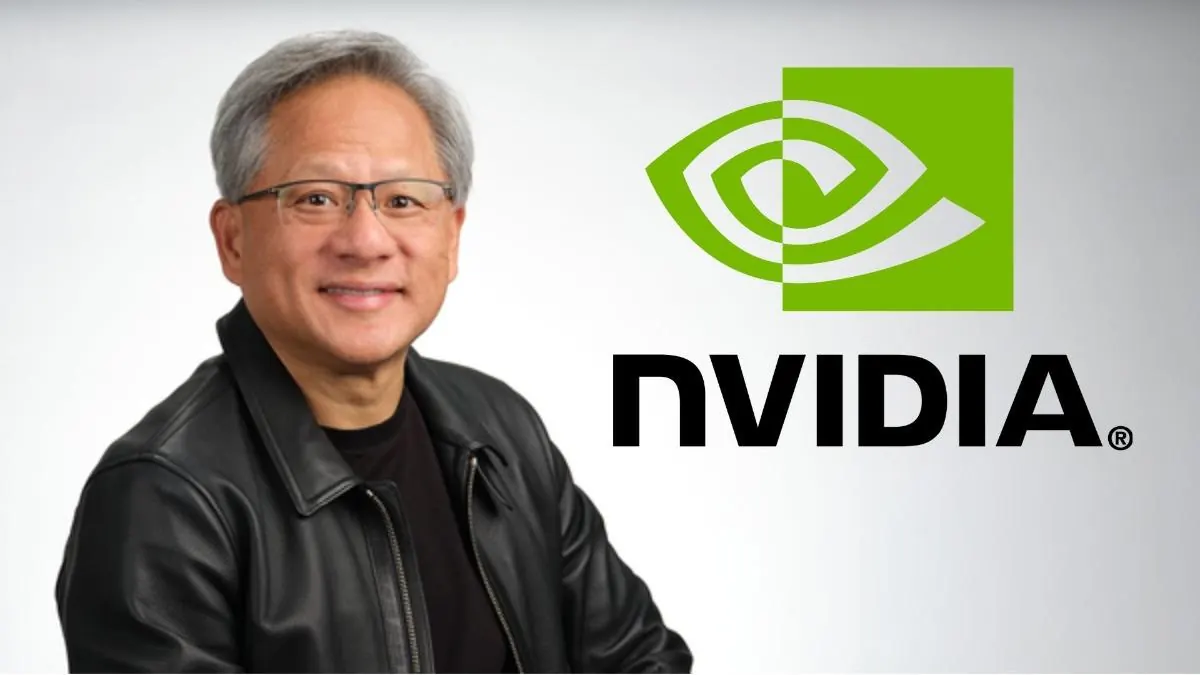
Jensen Huang Resigns as NVIDIA CEO is one of the biggest technology and artificial intelligence industry developments of November 2026. NVIDIA has officially announced that its co-founder and longtime chief executive has stepped down with immediate effect.
The company has appointed Colette Kress, its Executive Vice President and Chief Financial Officer, as interim CEO while its board searches for a permanent successor.
The leadership change comes at a significant time for NVIDIA, which has become one of the world’s most influential companies in artificial intelligence chips, accelerated computing and data-centre infrastructure.
Here is what happened, who will lead NVIDIA next and why this development matters for the global AI industry.
1. Why Did Jensen Huang Resign as NVIDIA CEO?
On November 12, 2026, NVIDIA announced that Jensen Huang had resigned as President, Chief Executive Officer and a member of the company’s board, effective immediately.
The announcement followed a turbulent period involving reports about Huang’s personal relationships and possible national security concerns.
NVIDIA had previously announced an independent investigation following media reports about an alleged relationship involving one of the company’s business contacts. Huang also acknowledged being unfaithful to his wife in a message to employees, according to reporting by NPR.
However, it is important to distinguish between confirmed information and allegations. Reports about possible intelligence links and security implications have not all been independently established. China has rejected the spying allegations.
NVIDIA’s board had appointed an independent legal team to investigate the matter before announcing the leadership transition.
Sources: NVIDIA Newsroom and NPR reporting.
2. Who Is Colette Kress, NVIDIA’s New Interim CEO?
Colette Kress has been appointed interim CEO following Huang’s resignation.
She joined NVIDIA in September 2013 and has served as the company’s Executive Vice President and Chief Financial Officer.
Before joining NVIDIA, Kress spent nearly 25 years in finance positions at major technology companies, including Cisco and Microsoft.
Her experience includes financial management, corporate planning and supporting NVIDIA’s growth through the expansion of artificial intelligence and accelerated computing.
According to NVIDIA’s announcement, Kress will continue serving as CFO while acting as interim CEO until a permanent successor is appointed.
The board has said it will consider both internal and external candidates for the permanent position.
3. NVIDIA Appoints Harvey C. Jones as Its First Board Chair
Alongside the CEO transition, NVIDIA announced another important leadership change.
Harvey C. Jones has been appointed as the company’s first-ever Chair of the Board.
Jones is an entrepreneur, technology executive and investor. He has also served as Chief Executive Officer and Executive Chairman of Synopsys.
His appointment gives NVIDIA a dedicated board chair as the company enters a new leadership phase.
The board has expressed confidence in Colette Kress and the existing leadership team, stating that it expects customer commitments, company operations and the technology roadmap to continue without interruption.
4. Why Jensen Huang’s Departure Matters for the AI Industry
Jensen Huang co-founded NVIDIA in 1993 and led the company for more than three decades.
Under his leadership, NVIDIA evolved from a graphics-chip manufacturer into a major provider of GPUs, AI accelerators, networking systems and computing platforms.
Its technology is widely used by cloud providers, AI developers, research organisations and businesses building large-scale artificial intelligence systems.
His departure matters for several reasons.
Leadership and AI Strategy
Investors and industry observers will watch how NVIDIA maintains its long-term strategy under interim leadership.
The company’s future direction will be important for AI chips, data centres, robotics and accelerated computing.
Customer and Partner Confidence
NVIDIA works with major cloud providers, technology companies, governments and research institutions.
Maintaining confidence among these customers and partners will be a priority during the transition.
Competition in AI Chips
The AI hardware market is becoming increasingly competitive.
Companies such as AMD and other specialised chip developers are working to expand their presence in AI computing.
NVIDIA’s ability to maintain its technology advantage and customer relationships will remain important.
Corporate Governance
The transition also raises questions about succession planning, board oversight and how large technology companies manage leadership risks.
5. What Happens to NVIDIA’s AI Business Now?
A CEO change does not automatically mean that a company’s technology strategy will change overnight.
NVIDIA has said that its experienced leadership team remains in place and that its operations, customer commitments and product roadmap are expected to continue without interruption.
The company is still active in several important technology areas:
- AI computing and GPU development.
- Data-centre infrastructure.
- Networking and accelerated computing.
- Robotics and physical AI.
- AI software and developer platforms.
- High-performance computing.
The next few months will be important for understanding how the new leadership structure affects these businesses.
NVIDIA’s scheduled third-quarter fiscal 2027 financial results announcement is set for November 17, 2026, according to its official announcement.
Investors and technology companies will be watching the company’s financial performance and management commentary closely.
6. What Should NVIDIA Investors Watch?
The news may create uncertainty for shareholders, but a CEO resignation alone does not determine the future performance of a stock.
Investors should focus on measurable business developments rather than reacting only to headlines.
Important factors to monitor include:
- NVIDIA’s upcoming financial results.
- Data-centre and AI chip demand.
- Gross margins and operating performance.
- Customer spending on AI infrastructure.
- Competition from AMD and other chip developers.
- The permanent CEO succession process.
- Updates from the independent investigation and the board.
NVIDIA’s future performance will depend on its business fundamentals, competitive position, customer demand and broader technology-market conditions.
This article does not suggest buying or selling NVIDIA shares.
7. What Could This Mean for the Future of Artificial Intelligence?
Artificial intelligence has become a major global technology industry, and NVIDIA has played a central role in supplying the computing infrastructure behind many AI systems.
The leadership transition is therefore important beyond the company itself.
AI developers, cloud providers, chip manufacturers and enterprise customers will want to see stability in NVIDIA’s product development and supply commitments.
The company’s ability to maintain its engineering strength, partnerships and innovation roadmap will be more important than any single leadership announcement.
The transition also highlights why strong corporate governance and succession planning matter in technology companies whose founders have been closely associated with their brands for decades.
Frequently Asked Questions
Has Jensen Huang resigned as NVIDIA CEO?
Yes. NVIDIA officially announced on November 12, 2026, that Jensen Huang had resigned as CEO, President and a member of the board, effective immediately.
Who is the new NVIDIA CEO?
Colette Kress has been appointed interim CEO. She previously served as NVIDIA’s Executive Vice President and Chief Financial Officer.
Why did Jensen Huang leave NVIDIA?
His resignation followed a period of media reports about personal relationships and possible national security concerns. NVIDIA had initiated an independent investigation. The precise circumstances and all allegations should not be treated as independently established facts.
Who is Harvey C. Jones?
Harvey C. Jones is an entrepreneur, technology executive and investor. NVIDIA appointed him as its first-ever Chair of the Board.
Will NVIDIA continue developing AI chips?
NVIDIA has stated that its operations, customer commitments and technology roadmap are expected to continue without interruption under its existing leadership team.
Should investors sell NVIDIA shares after this news?
A leadership change alone is not sufficient reason to make an investment decision. Investors should examine company financial results, business fundamentals, risks and their own investment objectives.
Final Thoughts
Jensen Huang’s resignation marks a major leadership transition for NVIDIA after more than three decades under its co-founder.
Colette Kress now faces the challenge of maintaining business continuity while the board searches for a permanent CEO.
For the global technology industry, the most important question is whether NVIDIA can maintain its AI leadership, customer confidence and innovation momentum during this transition.
The company’s upcoming financial results and leadership developments will provide more information about its next chapter.
Source note: This article is based on NVIDIA’s official November 12 announcement, its SEC filing and reporting from established news organisations. Allegations are identified as allegations and should not be treated as proven facts.
Disclaimer: This article is for informational and educational purposes only. It is not investment advice or a recommendation to buy or sell NVIDIA shares.