

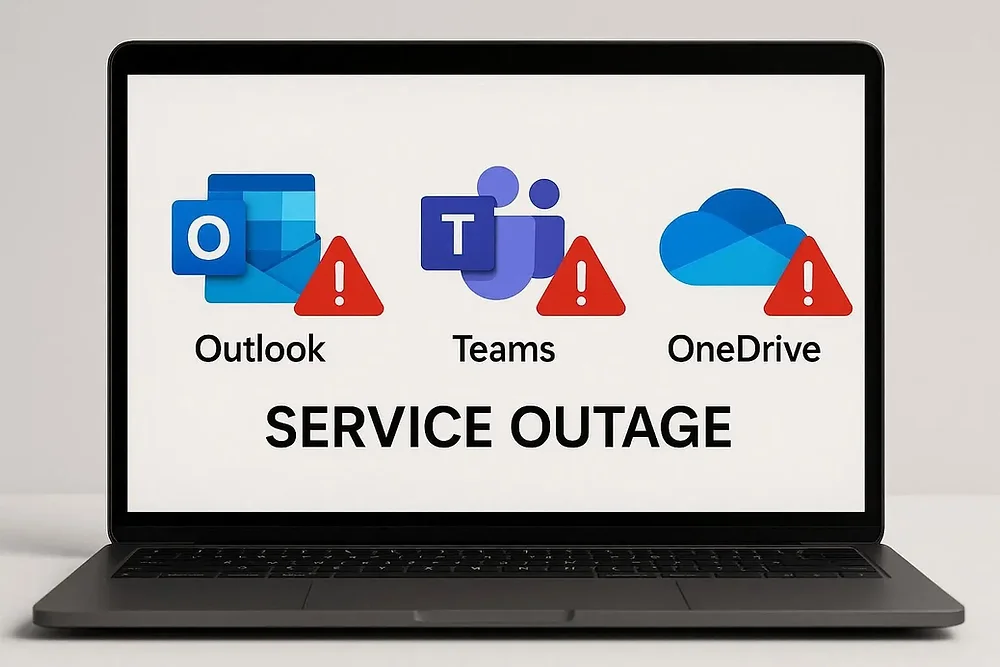
Microsoft Outage Update brings encouraging news for users affected by the global disruption of Outlook, Teams and Microsoft 365. On November 13, 2026, Microsoft reported positive results for server stability after applying a patch to part of its infrastructure. However, the company has not yet confirmed that all affected services have returned to normal.
The outage, which began on November 12, disrupted email access, workplace communication and several cloud-based services across multiple countries.
Microsoft Outage Update: What Has Changed?
Microsoft’s latest update indicates that its engineers are seeing positive results after applying an upstream authentication and routing configuration component patch to a portion of its infrastructure.
The company is monitoring the stability of the affected servers and working to expand the patch to servers supporting regions that are coming back online.
This is an improvement compared with earlier recovery attempts, which Microsoft said were not progressing as expected.
However, positive server stability results do not mean that every user has regained full access to Microsoft 365.
5 Positive Recovery Signs in the Microsoft Outage
1. Microsoft Reports Improved Server Stability
Microsoft has reported positive results after applying a configuration component patch to part of its infrastructure.
The company is continuing to monitor the results before expanding the changes to additional servers.
2. Recovery Work Is Expanding Across Regions
Microsoft is working to extend the patch to servers supporting active regions coming back online.
The company is also monitoring infrastructure capacity to support the return of services.
3. Teams and Other Services Are Showing Different Levels of Impact
The disruption has affected several Microsoft products, but not every feature has been affected in the same way.
Some Teams features that depend on Exchange Online have experienced problems, while other messaging and meeting functions have continued to work in certain regions.
Users should check the latest service status rather than assume that every Microsoft application is either fully down or fully restored.
4. Microsoft Says There Is No Current Indication of a Cyberattack
Microsoft has stated that it is not aware of malicious activity causing the incident.
The company has promised to provide further information about the root cause and corrective actions in a post-incident report after the disruption is mitigated.
5. Microsoft Is Continuing Its Recovery Efforts
The latest positive results are an important step, but Microsoft is still monitoring server performance and expanding its recovery measures.
There is no confirmed time for complete restoration in the available updates.
Which Microsoft Services Have Been Affected?
The global disruption has affected several Microsoft services and connected workplace applications.
These include:
- Outlook: Users have experienced problems opening inboxes, sending and receiving emails.
- Microsoft Teams: Some users have reported problems with calendars, scheduling and features connected to Exchange Online.
- Microsoft 365: Certain web-based applications and workplace functions have been disrupted.
- OneDrive: Users have reported access and connectivity problems.
- OneNote and Microsoft To Do: These consumer services have also been listed among the affected products.
- Microsoft Copilot: Some Copilot experiences and connections to workplace information have been affected.
The exact impact can vary by service, region and user account.
Global Impact: India, Japan and Other Countries
The disruption has affected businesses, public institutions and users across several countries.
Reports tracked by Downdetector reached nearly 130,000 at the peak of the disruption. The incident was reported across 74 countries and territories.
In India, IndiGo and Akasa Air reported that their email support services were affected.
In Japan, government ministries and businesses faced email disruptions. Some organisations temporarily switched to alternative communication methods, including text messaging and telephone calls.
The outage also affected connections used by AI companies OpenAI and Anthropic to access Microsoft 365 workplace information.
These incidents show how widely businesses depend on cloud-based email and collaboration systems.
Why Did the Microsoft Outage Happen?
Microsoft initially reported elevated infrastructure load and connectivity errors affecting Exchange Online.
The recovery process became more complicated when some servers returned to service but became unresponsive again as traffic started flowing back.
Microsoft has since applied infrastructure patches and is monitoring server stability.
The company has not yet published its final root-cause report. Therefore, the precise technical cause should not be treated as fully established.
Microsoft has also said it has no current indication that malicious or cyber activity caused the incident.
What Should Microsoft 365 Users Do?
While Microsoft continues its recovery work, users can take a few practical steps:
- Check the official Microsoft service health page before repeatedly attempting to sign in.
- Avoid repeatedly refreshing Outlook or Teams if the service is experiencing connectivity errors.
- Use approved alternative communication channels for urgent business messages.
- Save important work locally where permitted by your organisation.
- Follow your company’s IT team’s instructions before changing account or security settings.
Businesses should also review their backup communication systems and business continuity plans.
Where to Check the Latest Microsoft Outage Status
For the most reliable information, users should follow Microsoft’s official service health updates.
The official status page provides information about Microsoft 365 service degradation and recovery progress.
Users can also check Microsoft’s Azure Service Health page for relevant cloud infrastructure information.
Final Thoughts
The latest Microsoft Outage Update offers a positive sign for users waiting for Outlook, Teams and Microsoft 365 services to return to normal.
Microsoft has reported improved server stability after applying a configuration patch and is working to expand the recovery measures across affected regions.
However, full restoration has not yet been confirmed. Users and businesses should continue checking official service updates until Microsoft declares the incident resolved.
Latest update: November 13, 2026.
Editorial Note: This article reflects the available Microsoft and media updates at the time of publication. Service availability may change as recovery continues.